
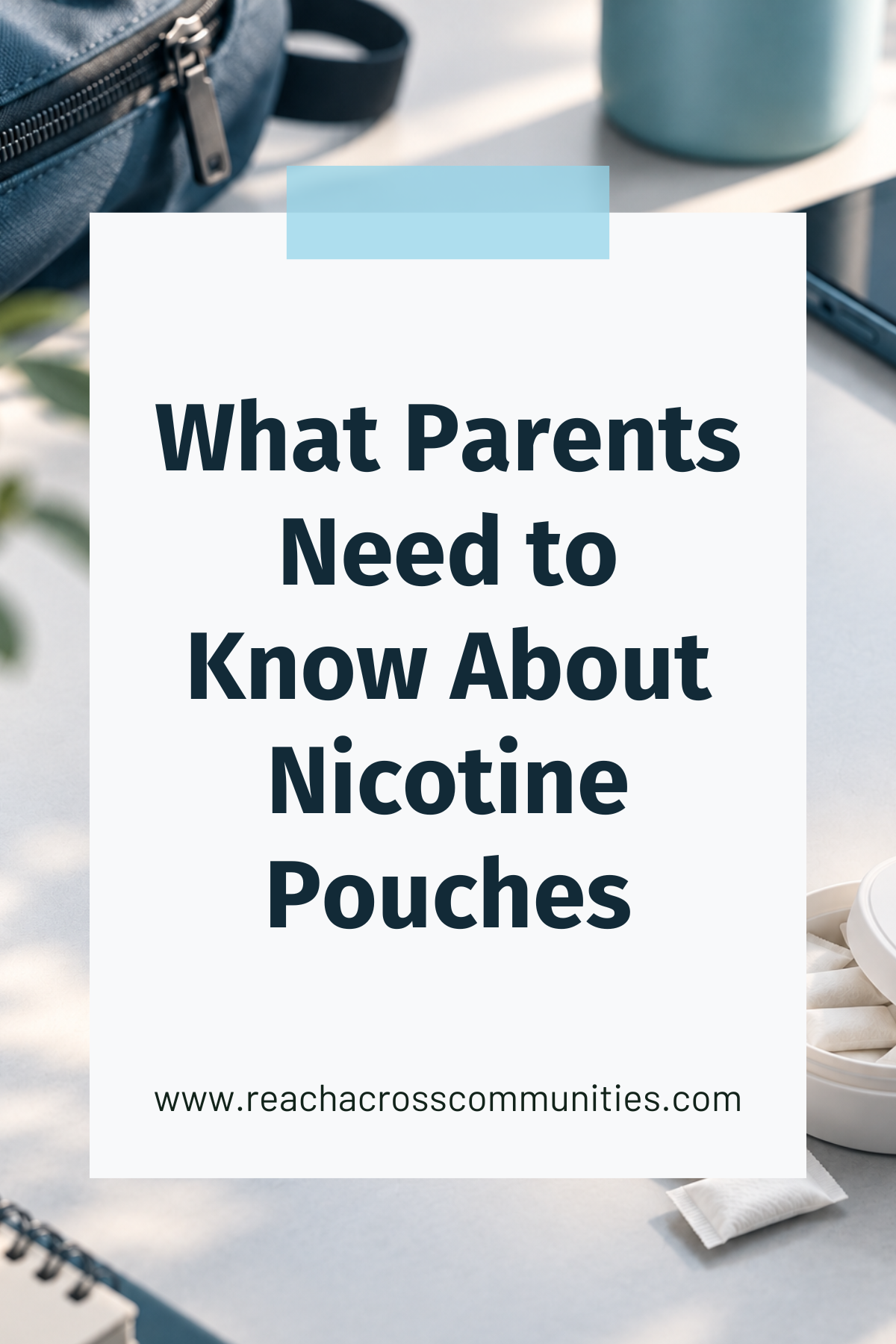
You might recognize a vape or cigarette immediately. But what about a small white pouch that looks a little like a breath mint? Or a round container tucked into a backpack?
Nicotine pouches have become another product parents and caregivers need to know about. They're discreet, come in a variety of flavors, and don't produce the smoke or vapor typically associated with nicotine use.
But their appearance can be misleading.
Understanding what these products are, why teens might be interested in them, and how to start a conversation can help families make more informed decisions.
What Are Nicotine Pouches?
Nicotine pouches are small, white packets containing nicotine, flavorings, and other ingredients. They're placed between the lip and gum, where nicotine is absorbed through the lining of the mouth.
Unlike cigarettes, they don't require smoking. Unlike vapes, there's no device or visible vapor. And unlike traditional chewing tobacco, they don't contain tobacco leaves.
However, tobacco-free doesn't mean nicotine-free. The nicotine in these products may come from tobacco plants or be made synthetically, and both forms can be addictive.
Nicotine pouches also shouldn't be confused with nicotine patches, which are worn on the skin and are available as FDA-approved smoking cessation treatments.
Names and Slang Parents Might Hear
Nicotine pouches are sold under brand names such as ZYN, on!, and Rogue, but you may also hear more casual terms:
Zyn or Zyns: References to the popular nicotine pouch brand.
Lip pillows: A nickname for the small pouches placed between the lip and gum.
Upper deckies: A slang term referring to pouches placed under the upper lip.
These names are documented by Truth Initiative and state public health agencies. Slang varies, and hearing one of these terms doesn't necessarily mean a teenager is using nicotine.
Still, recognizing the language can help parents understand conversations that might otherwise go unnoticed.
Why Are Nicotine Pouches Getting Attention?
Nicotine pouches are easy to carry and use discreetly, and many come in familiar flavors such as mint, citrus, and fruit.
But how common are they among teenagers?
According to the FDA's 2025 National Youth Tobacco Survey, published in June 2026:
460,000 U.S. middle and high school students, or 1.7%, reported using nicotine pouches in the past 30 days.
90.8% of current youth nicotine pouch users reported using flavored products, with mint being the most popular flavor.
17.6% of current youth nicotine pouch users reported using them every day.
Nicotine pouches were the second most commonly reported tobacco product among students, following e-cigarettes.
It's important to keep these numbers in perspective. Most teenagers are not using nicotine pouches, and overall youth use remained statistically stable between 2024 and 2025.
Still, hundreds of thousands of young people reporting use is reason enough for parents to understand the products and their potential risks.
Are Nicotine Pouches Actually Safer?
Because nicotine pouches don't involve smoking or inhaling vapor, it's understandable that someone might assume they're harmless.
The reality is more complicated.
According to the FDA, certain nicotine pouches may present lower health risks than cigarettes for adults who smoke and switch completely to those products.
In June 2026, the FDA also authorized specific ZYN products to carry claims about reduced risks of certain diseases compared with cigarette smoking.
But lower risk than cigarettes doesn't mean safe, especially for teenagers.
Nicotine is highly addictive and can affect the developing adolescent brain. The CDC explains that nicotine use during adolescence can harm areas of the brain responsible for attention, learning, mood, and impulse control.
Brain development continues into young adulthood, and signs of nicotine dependence can appear even before someone begins using nicotine every day.
Researchers are also still studying the long-term health effects of nicotine pouches.
Another important distinction: Nicotine pouches have not been FDA-approved as a way to quit smoking or nicotine use.
For teenagers who don't use nicotine, the healthiest choice is to avoid starting.
How Can Parents Start the Conversation?
You don't have to be an expert on every nicotine product to have a useful conversation with your teen.
In fact, a good place to start is by asking what they already know.
Maybe they've seen nicotine pouches mentioned on social media. Maybe a friend has talked about ZYN. Or maybe they've never heard of them.
Rather than opening with a warning or a lecture, try a few questions:
"Have you heard people talking about nicotine pouches or ZYN?"
"What do kids your age think about these products?"
"Did you know something can be tobacco-free and still contain addictive nicotine?"
Listen to their answers, ask follow-up questions, and share what you've learned.
If your teen believes nicotine pouches are harmless because they don't produce smoke, you can explain the difference between avoiding smoke exposure and avoiding nicotine-related risks.
You can also talk about how flavors, product packaging, and social media content may shape the way young people view nicotine.
The goal is to make these conversations comfortable enough that your teen will feel able to ask questions later, too.
What If Your Teen Is Already Using Nicotine?
Finding out your teen is using nicotine can be upsetting, but your response can influence whether they're comfortable asking for help.
Try to understand what led them to start, how often they're using it, and whether they've tried to stop.
Nicotine dependence can make quitting difficult. Teens may experience cravings, irritability, trouble concentrating, or other withdrawal symptoms when they stop.
Rather than relying on punishment or willpower alone, offer support and help them explore quitting resources.
A healthcare professional can help assess nicotine dependence and recommend age-appropriate support.
The CDC recommends that parents talk openly with young people about tobacco products and encourage those already using nicotine to seek help quitting.
Supporting Healthy Choices in North Central Texas
Parents don't have to navigate these conversations alone.
Across Hill, Ellis, and Johnson counties, Reach Across Communities works with community partners to support substance use prevention, share educational resources, and encourage healthier choices among young people and families.
Learning about products such as nicotine pouches is one practical part of prevention. Having informed conversations at home, supporting young people who need help, and staying connected to local resources can all contribute.
Free resources for teens and families
If your teen is using nicotine or wants help quitting, these resources offer a place to start:
My Life, My Quit: A free, confidential quitting program for teenagers ages 13–17. Texas teens can connect with trained quit coaches and develop a personalized plan. Text Start My Quit to 36072 to get started.
Smokefree Teen: A National Cancer Institute resource offering quitting tools, information, and practical support for teenagers.
Texas Tobacco Quitline: Free quitting support for eligible Texas residents, including youth-focused services. Call 1-877-YES-QUIT (1-877-937-7848).
These resources can help families take the next step, whether that means answering questions, creating a quitting plan, or connecting with additional support.
And if you're looking for local prevention education, initiatives, or community events, Reach Across Communities is working right here in North Central Texas.