
Twice a year, residents in Ellis, Hill, and Johnson Counties have an opportunity to drop off expired or unused medications at local prescription drug take-back events. It's a simple way for families to safely dispose of medications they no longer need.
But behind community prevention efforts like these is an important question: How do we decide which actions will make the biggest difference?
For communities working to prevent substance use, good intentions are only the beginning. Understanding local challenges, choosing effective strategies, and learning from the results are all part of creating meaningful change.
That's where the Strategic Prevention Framework comes in.
What Is the Strategic Prevention Framework?
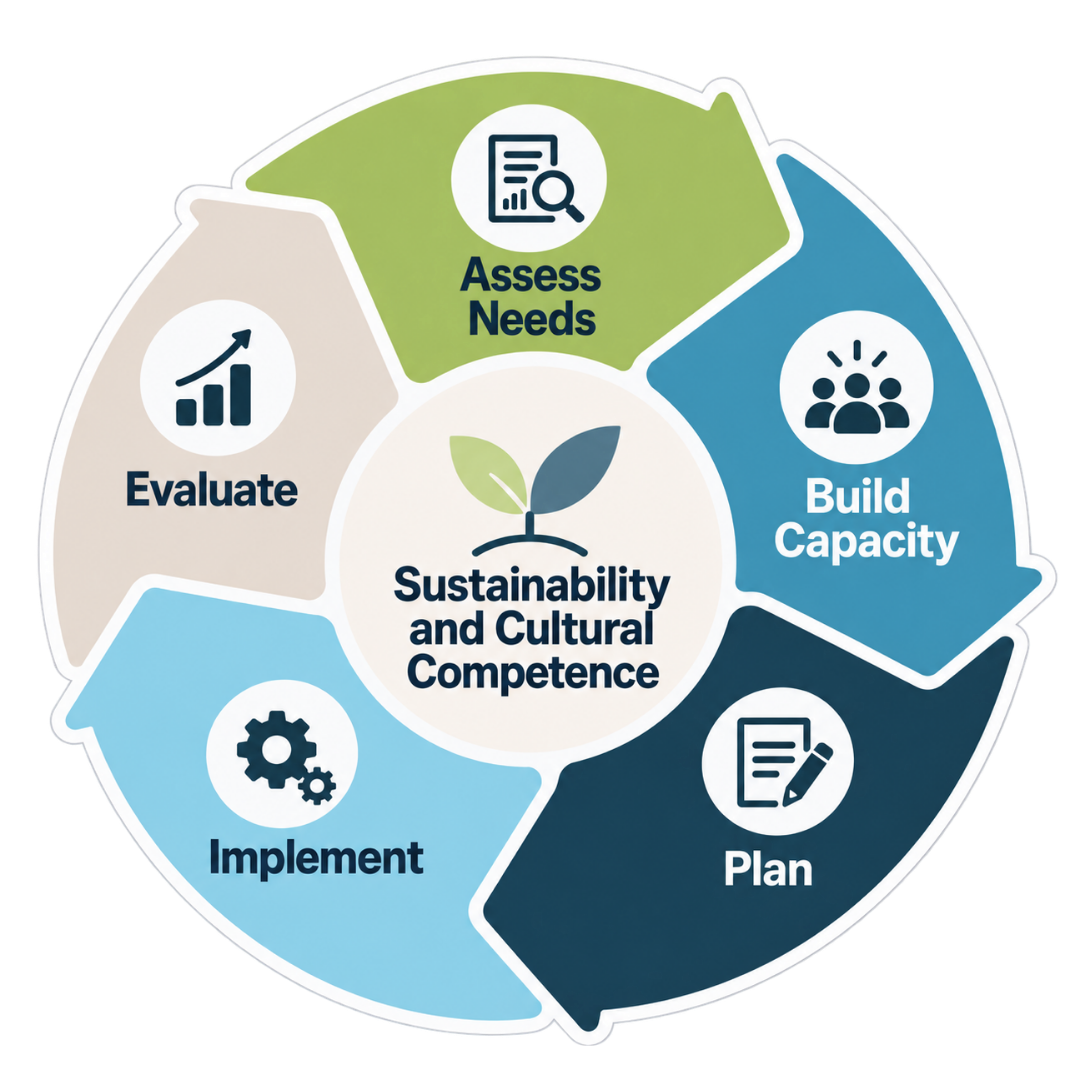
Developed by the Substance Abuse and Mental Health Services Administration (SAMHSA), the Strategic Prevention Framework (SPF) is a five-step planning process that helps communities address substance use and related behavioral health concerns.
The framework is grounded in a straightforward idea: Effective prevention begins with understanding the community.
Instead of choosing activities based on assumptions, coalitions examine local data, listen to community members, identify available resources, and develop strategies that respond to their findings.
And data doesn't always mean complicated charts or spreadsheets. School surveys, community feedback, public health information, and conversations with local organizations can all help build a clearer picture of what's happening.
The SPF organizes this work into five connected steps: Assessment, Capacity, Planning, Implementation, and Evaluation.
Together, they provide a practical process for turning community concerns into informed action.
The Five Steps of Effective Community Prevention
1. Assessment: What Does Our Community Need?
Before deciding what to do, communities need to understand what's happening and why.
Assessment involves gathering information about local substance use patterns, identifying risk and protective factors, and examining the resources already available.
For example, a coalition might review student surveys, public health data, or feedback from parents and educators to better understand concerns affecting local youth.
This process also helps distinguish between the issues people notice and the underlying conditions that may be contributing to them.
The goal is to make informed decisions about which needs deserve attention and where prevention efforts may be most useful.
2. Capacity: Who and What Can Help?
Once a community better understands its needs, the next question is whether it has the people, resources, and support to address them.
Capacity building brings together community members, organizations, and partners who can contribute knowledge, skills, relationships, or resources.
A local school may offer insight into student needs. Healthcare professionals can contribute expertise. Businesses, civic organizations, and volunteers may help share information or support community activities.
This is where the 12 community sectors play an important role. By bringing different perspectives together, coalitions can build the relationships and resources needed to support their prevention work.
3. Planning: What's the Right Approach?
Understanding a problem is important. Deciding how to address it takes careful planning.
During this step, coalitions identify priorities, establish measurable goals, and select evidence-based prevention strategies that fit their community's needs and available resources.
An evidence-based strategy is informed by research showing that an approach can be effective under appropriate conditions. Communities must also consider whether it makes sense for the people and circumstances involved.
Planning helps answer practical questions: What are we trying to accomplish? Which activities are most likely to help? Who will be involved? What resources will we need? And how will we measure progress?
With a clear plan, community partners have a shared direction for the work ahead.
4. Implementation: Putting Prevention Into Action
This is where planning becomes something people can see and participate in.
Implementation involves carrying out selected prevention programs, policies, and activities while making sure they're delivered as intended.
That might include educational presentations, awareness campaigns, community partnerships, or initiatives that promote safer choices.
For example, REACH Council supports local prescription drug take-back events that give residents a convenient way to dispose of unwanted medications. These events involve coordination with local partners and provide a practical opportunity for community members to participate in safe medication disposal.
Other prevention activities may focus on educating families, strengthening community connections, or helping young people develop healthy decision-making skills.
The specific activities can look different from one community to another, but each should connect to an identified need and a clear prevention goal.
5. Evaluation: How Do We Know What's Working?
Once an initiative is underway, the work isn't finished.
Evaluation helps communities understand what's going well, what could be improved, and whether prevention strategies are moving them toward their goals.
Some information is relatively easy to measure. For a drug take-back event, organizers might track how many people participated or how much unwanted medication was collected.
Those numbers help explain what happened during the event.
Understanding its broader impact may require looking at additional information over time, such as changes in community awareness or safe medication disposal practices.
Both types of information matter.
By reviewing results, gathering feedback, and making adjustments, coalitions can continue improving their efforts rather than assuming an activity was successful simply because it took place.
Two Principles That Guide Every Step
The Strategic Prevention Framework also includes two guiding principles: Cultural Competence and Sustainability.
These principles help ensure prevention efforts remain relevant to the people they serve and practical for the communities carrying them forward.
Cultural Competence means recognizing that people have different backgrounds, experiences, beliefs, and circumstances that influence how they understand and respond to prevention efforts.
It requires listening to community members, respecting their perspectives, and considering factors such as language, accessibility, and local culture when developing and delivering initiatives.
Sustainability focuses on maintaining meaningful prevention work over time.
A successful initiative needs more than initial enthusiasm. Strong partnerships, community ownership, dependable resources, and the ability to adapt all contribute to keeping prevention efforts going.
These principles are woven throughout the entire SPF process, from the first conversations about community needs to evaluating results and planning what comes next.
What Does This Mean for Hill, Ellis, and Johnson Counties?
North Central Texas is home to communities of different sizes, histories, and needs. A concern affecting families in Hillsboro may look different from one experienced in Waxahachie or Cleburne.
That's why local assessment and community involvement matter.
The Strategic Prevention Framework gives Reach Across Communities a consistent approach to understanding local concerns while allowing prevention priorities and activities to reflect the communities being served.
Across Hill, Ellis, and Johnson counties, Reach Across Communities supports initiatives that include youth and parent education, safe medication storage and disposal resources, mental health activities, local data collection, and community partnerships.
Each of these activities represents an opportunity to address concerns, share resources, or strengthen the protective factors that support healthier communities.
The SPF provides a way to connect that work to local needs, thoughtful planning, and ongoing evaluation.
Prevention Is an Ongoing Commitment
One of the most important things to understand about the Strategic Prevention Framework is that it doesn't end after five steps.
Communities change. New concerns emerge. Resources shift, and new information becomes available.
That's why the SPF is designed as a continuous cycle. Assessment informs planning. Implementation creates opportunities to learn. Evaluation helps communities decide what to maintain, improve, or reconsider.
By returning to these steps, coalitions can continue responding to what their communities actually need.
For Reach Across Communities, this approach supports a commitment to working alongside local residents and organizations to create healthier, safer communities across North Central Texas.